Ever run out of hot water mid-shower? A tankless system may be the solution. Reliable hot water is something most homeowners depend on every day in things ranging from morning routines to washing dishes and doing laundry.
Traditional water heaters use a storage tank to heat and hold a set amount of water, keeping it hot around the clock so it’s ready when you need it. While effective, this method can lead to running out of hot water and higher energy use.
A tankless water heater offers a modern alternative by heating water only when you need it. Instead of storing hot water, it works on demand, delivering a continuous supply whenever a tap is turned on.
In this blog, we’ll explore how tankless systems work and whether they’re the right fit for your home.
How Does a Tankless Water Heater Work?
A tankless water heater works by heating water only when you need it, rather than storing it in a tank. This on-demand process makes it both efficient and convenient for everyday use.
When you turn on a hot water tap, a flow sensor inside the unit detects the movement of water and signals the system to begin heating. Depending on the type of unit, either an electric heating element or a gas burner activates.
Cold water then passes through a heat exchanger, where it is rapidly heated to the desired temperature before flowing directly to your faucet or appliance. Because the water is heated as it moves through the system, you get hot water almost instantly and for as long as you need it.
Unlike traditional systems, there is no storage tank to fill or run out, which means you won’t have to worry about using up your hot water supply during back-to-back showers or household tasks.
Location and placement within the home matter as well, since tankless systems are compact but still need access to plumbing and power or gas connections.
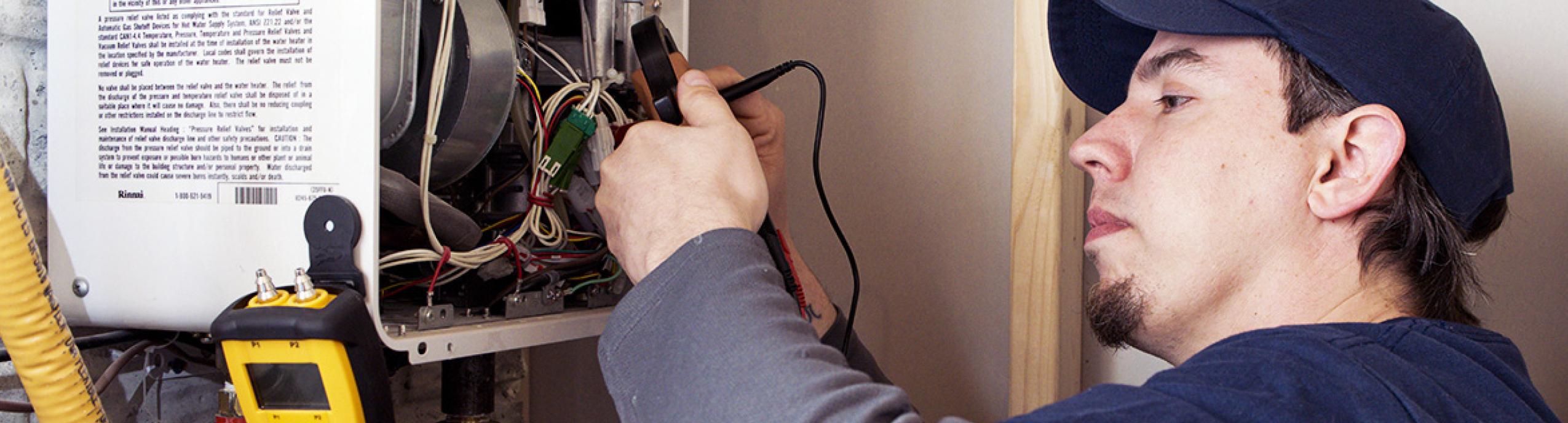
Because these factors can be complex, professional installation is highly recommended to ensure safety, efficiency, and optimal performance for your system.
Working with an experienced commercial or residential plumbing service like Commercial Service can help you choose the right system, handle installation requirements, and ensure everything is set up correctly for long-term reliability.
Types of Tankless Water Heaters
Tankless water heaters generally come in two main types: electric and gas.
Electric tankless water heaters are compact, energy-efficient, and typically easier to install. They’re a great option for smaller homes or point-of-use applications, such as a single bathroom or kitchen sink. However, they may struggle to keep up with high demand if multiple fixtures are used at the same time.
Gas tankless water heaters, on the other hand, offer higher output and are better suited for larger households with greater hot water needs. They can handle multiple appliances running simultaneously but often require more complex installation, including proper ventilation and gas line access.
Each type has its pros and cons, so it’s important to evaluate your household’s needs carefully. Choosing the right tankless water heater depends on your home’s size, usage, and energy source.
What are the Advantages of a Tankless Water Heater?
One of the biggest benefits provided by a tankless water heater is the ability to enjoy endless hot water. Because water is heated on demand, you won’t have to worry about running out of hot water during a long shower or while running the dishwasher.
Another major advantage is energy efficiency. Unlike traditional systems that continuously heat and store water, a tankless unit only heats water when it’s needed. This can help reduce energy consumption and lower utility bills over time.
Tankless systems also feature a space-saving design. Their compact, wall-mounted units take up far less room than bulky storage tanks, making them ideal for smaller homes or utility spaces.
In addition, tankless water heaters often have a longer lifespan than traditional tank systems, sometimes lasting nearly twice as long with proper maintenance. They also reduce the risk of leaks or water damage, since there’s no large tank that can fail or burst.
Overall, these benefits make tankless water heaters an appealing, efficient upgrade for many homeowners.
What are the Disadvantages of a Tankless Water Heater?
While tankless systems offer many benefits, it’s also important to consider the potential drawbacks. It’s also important to understand what the disadvantages of a tankless water heater are before making a decision.
One of the main concerns is the higher upfront installation cost. Tankless units themselves can be more expensive than traditional systems, and installation may require electrical upgrades or gas line modifications, which can add to the overall investment.
Another factor to consider is the limited flow rate. Although tankless systems provide hot water on demand, they may struggle to supply multiple fixtures at once—such as running a shower and dishwasher simultaneously—especially if the unit isn’t properly sized.
Homeowners may also notice a slight delay in hot water delivery, as the system activates and heats water when a tap is turned on.
A common misconception is that tankless systems provide unlimited hot water in all situations. While they don’t run out, their output is still limited by capacity. Understanding these limitations helps ensure you choose the right system for your household needs.
Installation Considerations for Homeowners
Before installing a tankless water heater, it’s important to evaluate a few key factors:
-
Proper sizing is essential, as units are rated by gallons per minute (GPM). Choosing the right size ensures your system can handle your household’s hot water demand without performance issues.
-
You’ll also need to consider fuel type availability as this can impact both installation requirements and long-term operating costs. For gas units, proper ventilation is necessary to safely exhaust combustion gases.
Tankless vs. Traditional Water Heaters
When comparing a tankless water heater to a traditional system, the biggest difference is how water is heated. As mentioned before, traditional units use a storage tank to keep hot water ready at all times, while tankless systems provide on-demand heating, delivering hot water only when needed.
In terms of energy usage, tankless models are typically more efficient since they don’t continuously heat stored water. They also tend to have a longer lifespan, often lasting several years longer than traditional tank systems.
However, traditional water heaters usually come with lower upfront costs. Tankless systems require a higher initial investment but can offer savings over time through improved efficiency.
Ultimately, the right choice depends on your household’s hot water needs, your budget, and your long-term goals.
Conclusion
A tankless water heater is a modern solution that heats water on demand, providing hot water whenever you need it without relying on a storage tank. While it offers key advantages like energy efficiency, space savings, and a longer lifespan, it’s important to weigh those benefits against factors like upfront costs and system capacity.
For many homeowners, the long-term efficiency and convenience make it a worthwhile investment.
If you’re considering upgrading your water heater, consulting a professional can help you determine if a tankless system is the right fit for your home and lifestyle.
Commercial Service Is Ready To Help
For homeowners in Indiana, choosing the right partner for your water heating system is key to getting the most out of your investment.
At Commercial Service, we have dedicated the last 75 years to helping Indiana’s residents and businesses stay comfortable and satisfied with their heating, cooling, and plumbing.
Contact us today or call (812) 339-9114 to schedule a consultation and take the first step toward a more cost and energy efficient water heating system