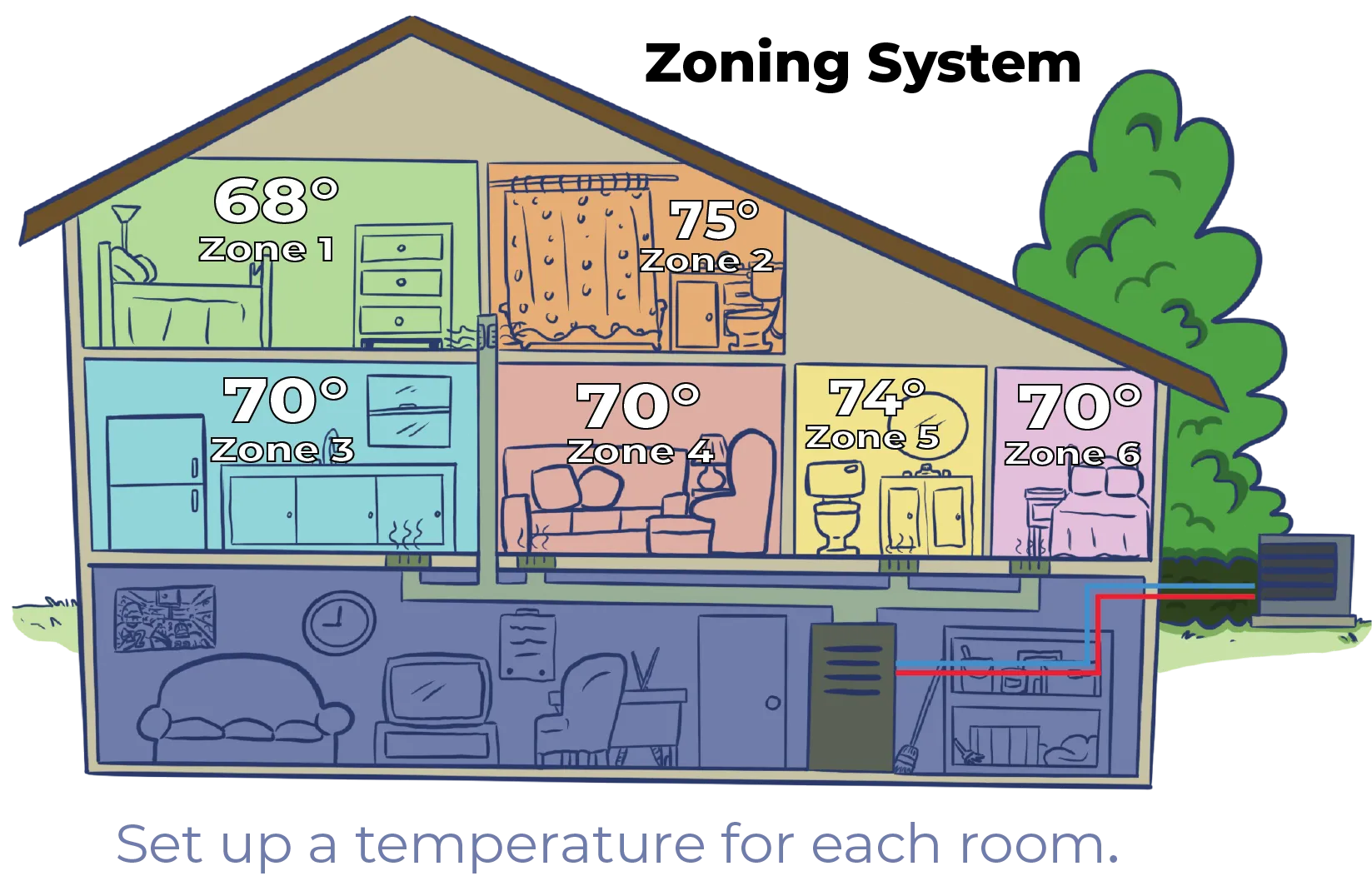
Zoning provides the ability to only condition those rooms that need heating or cooling and does not allow conditioned air into those zones not requiring it. Zoning does this through a series of components, the first being motorized dampers that open and close based on the demands of the zone thermostats. These dampers are inserted into the ducts or can be installed at the air outlet for each room or zone. Multiple dampers can be controlled together for a single zone if multiple ducts serve a single room or zone.1 Then, each new zone will need a thermostat to control its own fan and damper. In many homes, the existing thermostat can be used as a zone thermostat.
But wait! There’s another way to zone your home.
Adding zones to existing HVAC systems has never been easier. Installing a damper and different thermostat settings are some of the most popular ways to zone-control your home, but another option is through a mini-split system.
The benefit of using a mini-split system is to add another heating and cooling zone that is more efficient and easier to control. Mini-splits do not use any air ducts and do not need to be connected to existing HVAC equipment in any way, which makes the install easy and good for use in a room that does not have existing ductwork. This makes mini-split systems ideal for things like older homes where the current system is undersized or a basement or attic where there is no ductwork.2
Heating and AC zone control offer greater comfort throughout the home as well as increased savings on heating and cooling. When deciding if the traditional zoning or the mini-split system is the best for your home, give Commercial Service a call at 812-339-9114, and we’d be happy to help match you with your best system.